

Search engine optimization is evolving. Traditional SEO has largely focused on keyword rankings, organic traffic, and backlinks. Today, as AI-powered search experiences such as Google AI Overviews change how people discover information, I believe SEO professionals need to rethink how they plan and structure content.
Rather than focusing exclusively on the keywords we want to rank for, we must understand the questions users are trying to answer and the information they need throughout their search journey.
This is where search intent mapping becomes essential. It helps us connect keywords, user needs, and relevant content into a strategy designed for both traditional search engines and emerging AI-powered discovery experiences.
What Is Search Intent Mapping?
Search intent mapping is the process of identifying the underlying purpose of a search query and matching it to the most appropriate page or content format on a website.
In traditional SEO, search intent is commonly categorized into four types:
- Informational: Users want to learn something, such as “What is Takooni?”
- Navigational: Users want to find a specific website or brand, like “Gmail Login Page”, “Facebook Business Manager”, etc.
- Commercial: Users are researching options before making a decision, such as “ahrefs vs semrush price comparison”
- Transactional: Users are ready to take action, such as “buy flight ticket to bali.”
As Similarweb’s search intent guide explains, understanding intent helps marketers create content that aligns with what users actually want.
I see this as particularly important for GEO. AI-powered search experiences can address complex questions by drawing on multiple related topics. By organizing content around user needs rather than isolated keywords, We can build more coherent topic coverage and provide genuinely useful information.
However, intent mapping alone does not guarantee AI Overview visibility. Google’s official guidance on AI features emphasizes that established SEO fundamentals and helpful, reliable, people-first content remain important.
Search Intent Mapping vs. Keyword Research
Keyword research and search intent mapping serve different purposes, but I consider them complementary rather than competing activities.
Keyword research helps us discover what people search for, estimate demand, and identify opportunities relevant to our website. Search intent mapping helps us determine what content should address those searches and how each page fits into the broader user journey.
For example, keyword research might reveal these related queries:
- “What is keyword cannibalization?”
- “How to fix keyword cannibalization”
- “Keyword cannibalization checker”
Although these queries share a topic, their underlying needs differ. The first requires an explanation, the second calls for practical instructions, and the third suggests an interest in a tool or solution.
I would not automatically create three separate pages. Instead, I would examine the search results, the overlap between user needs, and whether one comprehensive page can satisfy multiple queries effectively.
Why Search Intent Mapping Will Define the Future of SEO?
Google is increasingly positioning AI Overviews as a key feature for answering users’ queries directly in search results. This reflects a broader objective: delivering a more satisfying search experience that encourages users to continue relying on Google Search to find the information they need.
If Google itself prioritizes understanding and satisfying its audience, shouldn’t we, as marketers who use search engines as a digital marketing channel, do the same? Especially in an era when information is widely available across social media platforms, we need to understand why people still turn to search engines and what they expect to find when they do.
The answer lies in the needs and intent behind every search query. Every query represents a question to be answered, a problem to be solved, or a goal to be achieved. Our content should address these needs rather than simply target keywords or compete for visibility in search results.
This is where Search Intent Mapping becomes essential. By mapping search queries to the needs and intent behind them, we can develop content that is not only more likely to appear in AI Overviews but, more importantly, genuinely relevant to our target audience. When our content aligns with what people are actually looking for, we create a stronger connection between their needs and our marketing objectives, ultimately guiding them toward the outcomes we want to achieve.
Steps to Perform Search Intent Mapping Effectively
1. Build a Relevant Keyword List
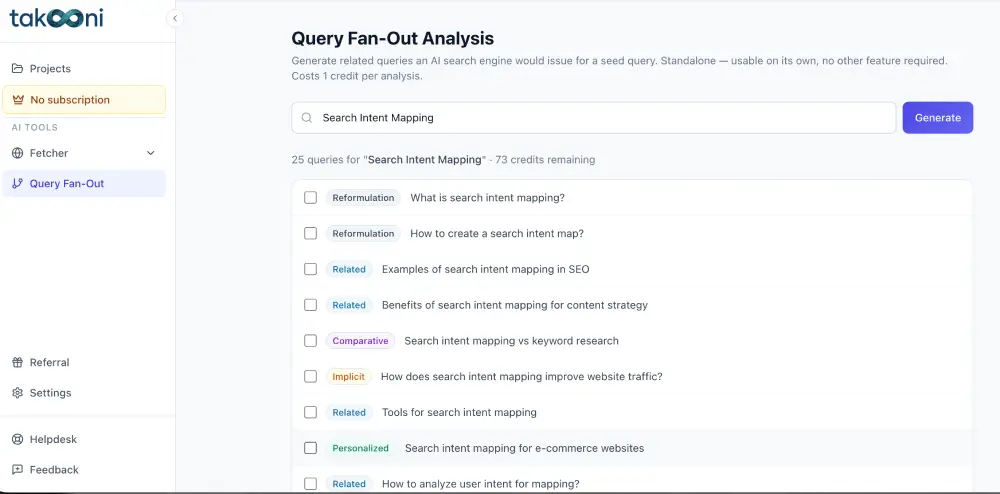
Let start by collecting query from tools, you may use takooni Query Fan Out feature to do so.
2. Analyze User Intent
Next, examine the current search engine results pages (SERPs) for important queries.
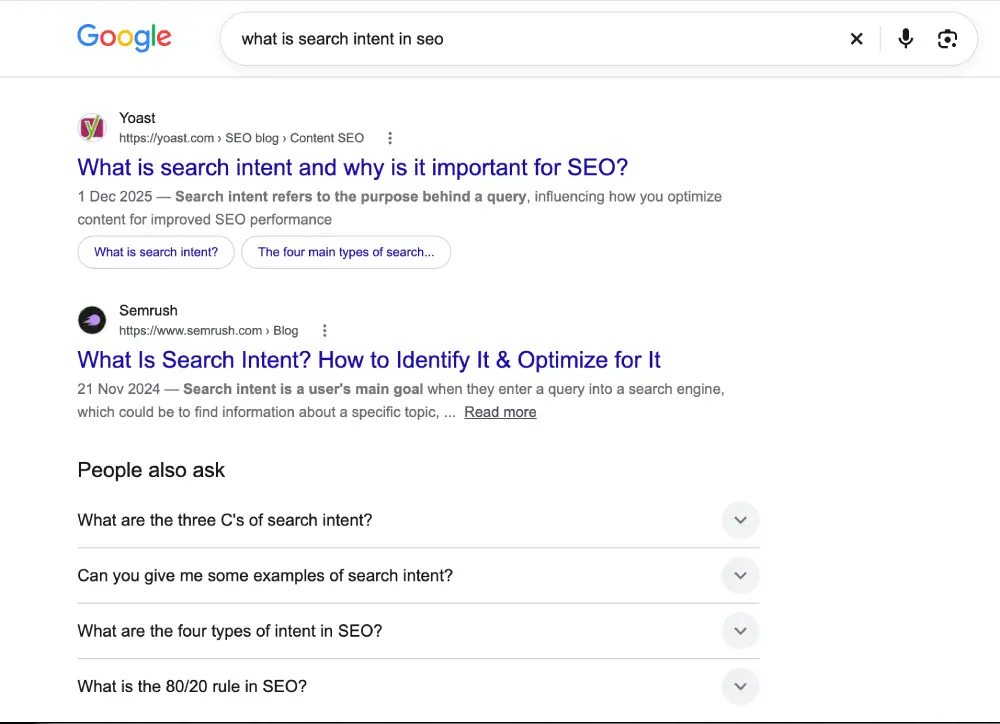
Look at the dominant content types, recurring subtopics, featured snippets, video results, and AI Overviews when available. These observations help us infer what search engines consider relevant to a particular query.
Manually mapping search intent can be time-consuming and resource-intensive. That’s why Takooni offers AI-powered Intent Distribution, helping SEO professionals streamline the process, reduce manual workload, and save costs—all included in their existing subscription plan, with no additional fees.

Try Takooni full feature only for $3, limited offer available
Try also to distinguish between what users explicitly ask and the additional questions they may need answered before making a decision.
Because search results can vary by location, language, and query wording, avoid assuming that every keyword within a topic has identical intent.
3. Group Keywords by Intent and Topic
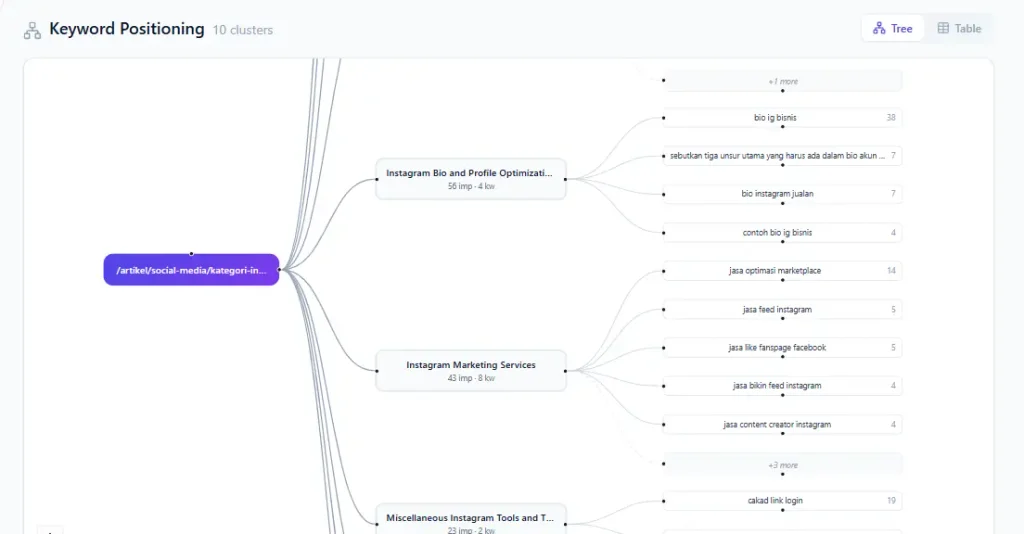
Once we understand the queries, try to group those that serve similar needs.
For example, “what is an SEO audit?” and “how does an SEO audit work?” might fit within one educational resource. Meanwhile, “SEO audit software comparison” may deserve a separate commercial page.
This would be more easier when we had pages indexed, since takooni also provided with topic clustering analysis feature.
4. Map Intent to Existing or New Pages
Then assign each keyword cluster to an existing page or identify a genuine content gap that warrants a new one.
For every page, I recommend to define its primary intent, target audience, main question, supporting subtopics, and desired next action.
This also helps us identify overlapping pages, missing information, and opportunities to improve internal linking.
5. Optimize for Traditional and AI-Powered Search
Finally, ensure each page answers its primary question clearly, supports its claims with trustworthy evidence, and provides information that adds value beyond generic summaries.
I use descriptive headings, logical content organization, relevant internal links, and original examples where appropriate.
For GEO, I pay particular attention to covering related questions naturally and providing useful context. However, I do not treat specific formatting tricks or AI-specific markup as guaranteed ranking factors. Google’s guidance continues to emphasize foundational SEO and unique, helpful content.
Common Mistakes in Search Intent Mapping
1. Prioritizing Search Volume Over Relevance
A keyword may attract substantial traffic but still be irrelevant to my audience or business objectives. I prioritize the ability to satisfy user needs over volume alone.
2. Creating Separate Pages for Every Keyword
Similar keywords do not always require individual URLs. Excessive fragmentation can create overlapping content and make a website harder to navigate. I evaluate intent and SERP overlap before deciding whether separate pages are justified.
3. Treating Search Intent as Static
User behavior, competitors, and search results can change. I revisit my intent map periodically and update content when the evidence suggests that a page no longer satisfies its intended audience.
4. Assuming GEO Requires a Completely Different SEO Strategy
I do not abandon established SEO practices simply because search experiences are becoming more conversational. Crawlability, indexability, clear site architecture, and useful original content remain important foundations. AI visibility is not guaranteed, even when these fundamentals are implemented correctly.